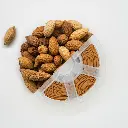
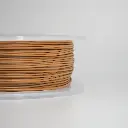
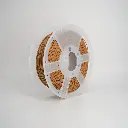

BIOWA Olive 90A Filament
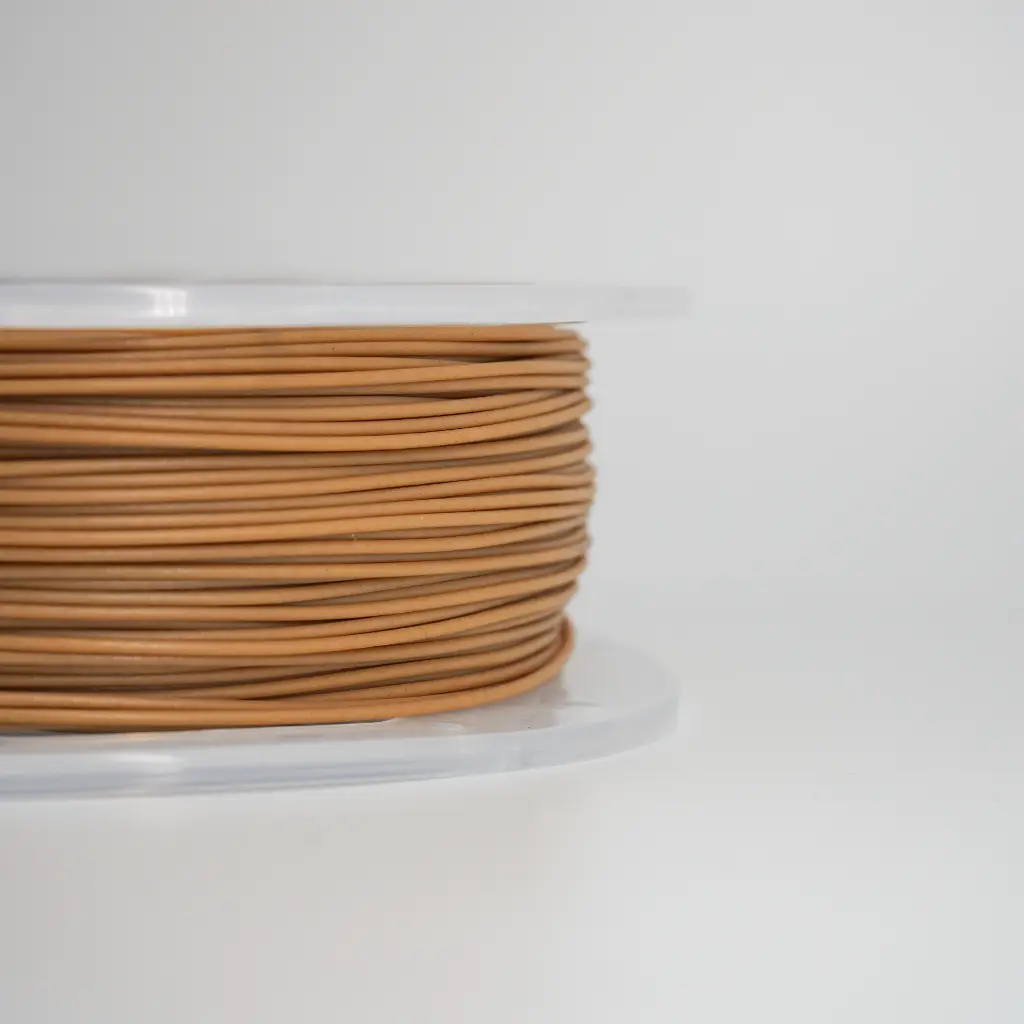
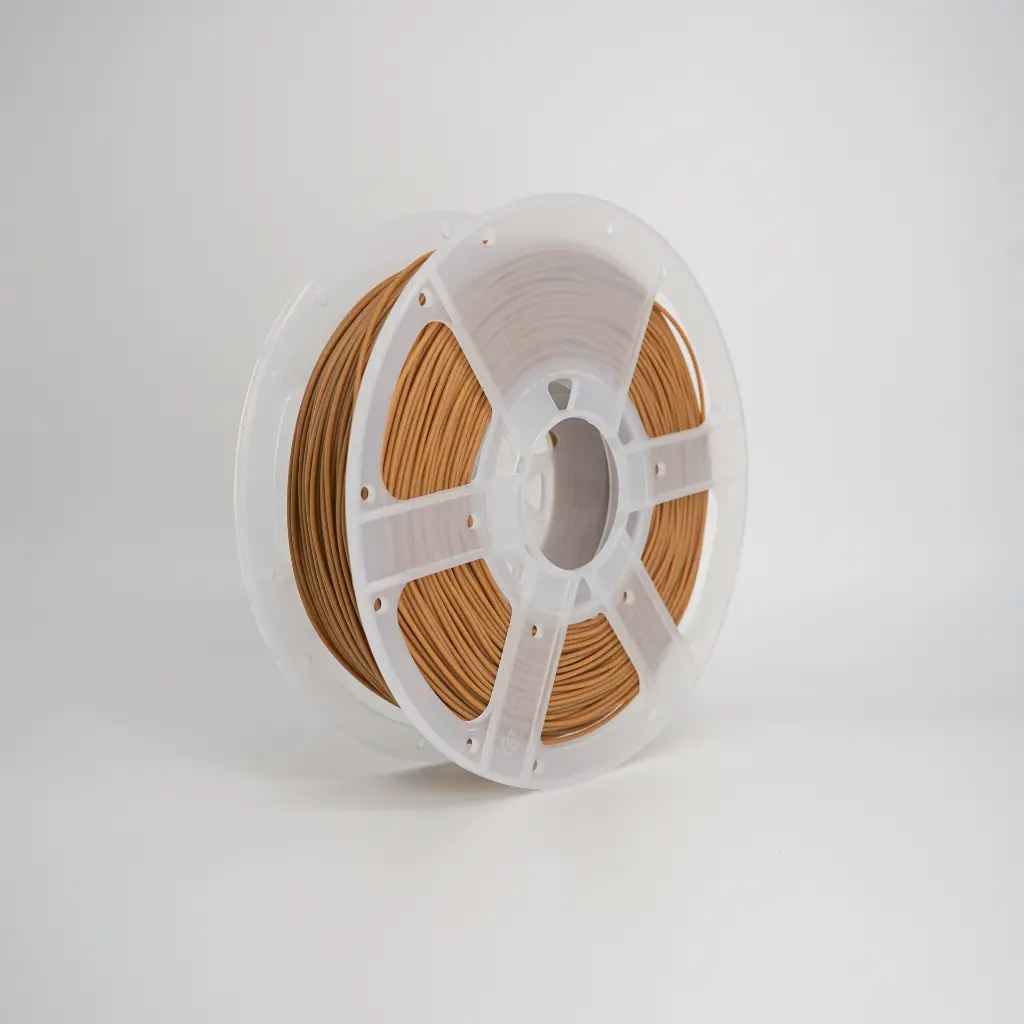
| Color: natural |
| Diameter: 1.75mm |
| Spool size: 0.7 kg |
Description
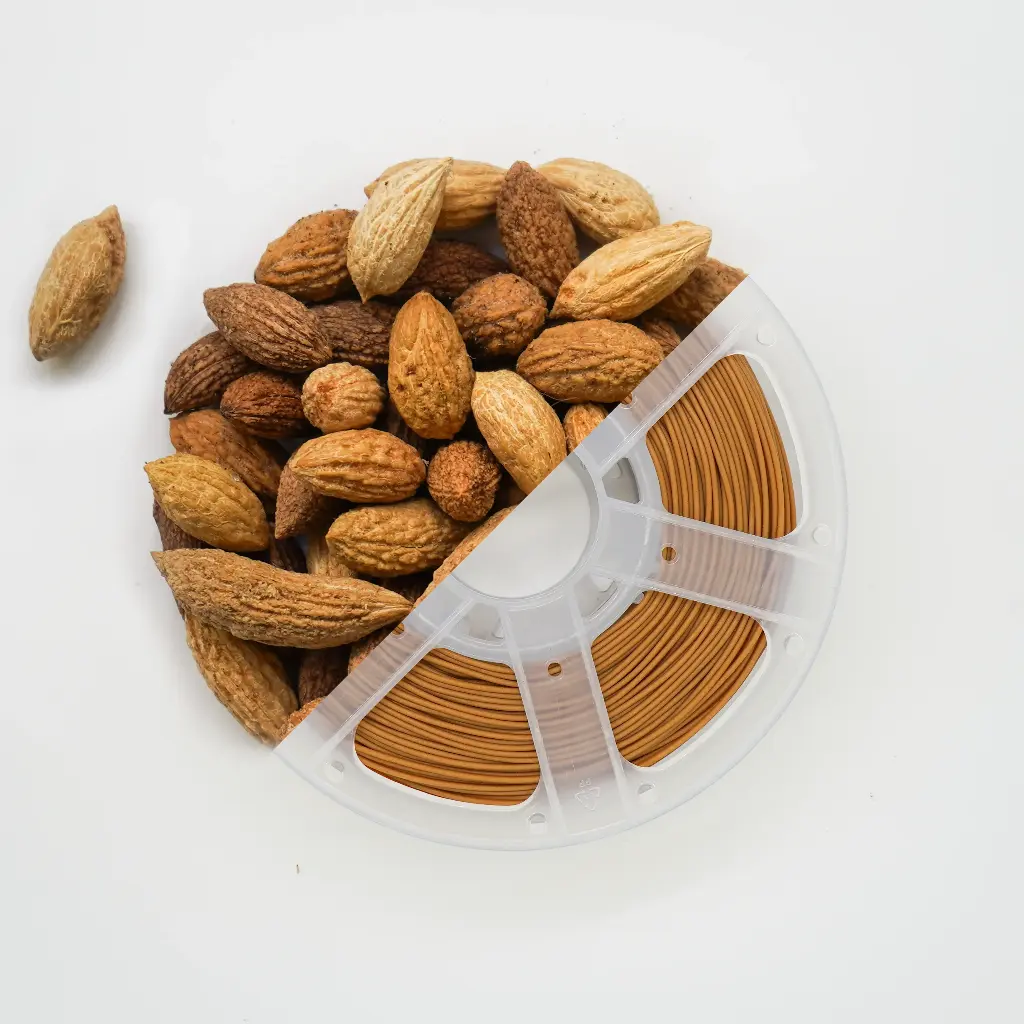
BIOWA Olive 90A filament is an R&D product developed and engineered by KUORI to enable prototyping with an elastic, partially bio-based, biodegradable, and recyclable 3D-printing filament.
This thermoplastic elastomer (TPE), containing food by-products, provides an eco-friendly alternative to conventional filaments, redefining the rubber and elastic materials industry to a circular future.
Product parameters
Product 3D-Printing Filament
Material BIOWA Olive 90A
Shore Hardness 90A
Dimensions L 20cm / W 20cm / H 6cm
Weight 700g
Colour natural brown - undyed
not UV-resistant
Highlights
- Biobased with biodegradable microplastics 🌱
Derived from food byproducts, towards a circular future. - Recyclable end-of-life solution ♻️
BIOWA can be mechanically recycled and reprinted multiple times. - Bioelastomer
Our filament is tuned for elastic performance. Filled with food sidestream, offering unique mechanical properties and texture.
Shore hardness: 90A - Filament production made in Switzerland 🇨🇭
Precision manufacturing. - Filled with foodwaste sidestreams
Our filament uses natural fillers, offering unique texture and smell. - 60% lower CO₂ footprint 👟
Reduced environmental impact compared to conventional thermoplastic elastomers.
Print Manual
These values serve as starting recommendations based on internal KUORI testing. Download the Testprint files with prepared Settings for Prusa XL and adjust according to your printer, environment, and part geometry.
Drying (Essential)
Properly dried filament is crucial for achieving high-quality printing results.
- Temperature: 50 - 55 °C
- Time: minimum 1 hour
- Recommendation: After drying, store the filament in a sealed dry box or humidity-controlled container to prevent moisture absorption.
Idler tension
- To prevent the filament from folding or buckling in the extruder, loosen the idler screws to the bear minimum. The filament should slip if it is not being fed through the nozzle.
- It’s best to fine-tune the idler tension while performing a test print. Start with the loosest setting possible and tighten gradually if necessary.
Filament sensor
- Due to the reduced tension from the idler adjustment, it may be necessary to bypass or adapt the filament sensor to prevent filament stretching or underfeeding during printing.
Spool holder
- Use a ball-bearing spool holder so the spool rotates freely. Preferably mount the spool inside a dry box with a bearing holder to keep the filament dry and minimise feed resistance.
Filament tube
- Use PTFE tubing for the filament path to reduce friction and smooth feeding.
Nozzle Diameter
Due to the organic fillers in our filament, we recommend to use nozzle diameters from ≥0.6mm to prevent clogging.
Print Speed = Volumetric Speed ÷ (Line Width × Layer Height)
Unlike standard filaments, flexible filaments tend to stretch during extrusion, producing thinner lines than expected. As a result, the actual line width will often be slightly smaller than the nozzle diameter.
Nozzle | Layer Height | Line Width | Volumetric Speed |
0.8 mm | 0.4 mm | 0.75 - 0.9 mm | 4-6 mm³/s |
- Recommended print speed: 15–25 mm/s for optimal quality. After slicing, check both the Print Speed and Volumetric Speed values.
- Because of the looser idler screw tension, retraction settings should be reduced, both in distance and speed, compared to default values.
- To compensate for the reduced retraction, increase the travel speed, particularly along the Z-axis, within the printer’s mechanical limits, to help minimize stringing.
Retraction Settings
Nozzle | Distance | Speed |
0.8 mm | 0.5 - 0.75 mm | 25 mm/s |
Nozzle Temperature
- First Layer: 165 °C
- Other Layers: 160 °C
Bed Temperature
- 60–70 °C
- Use an adhesive to improve print bet adhesion
- General: 0 % (fan off)
- First layer: 0 %
- For bridging: 80% fan speed
BIOWA Olive 90A Filament adheres best when the first layer is printed without cooling.
Issue | Cause | Solution |
Inconsistent extrusion/bubbles | Moist filament | Re-dry filament |
Poor bed adhesion | First layer too fast or too cool | Slow down or slightly heat bed |
Stringing | Too high temperature or slow retraction | Increase retraction/reduce temp |
Layer gaps | Underextrusion - wrong line width | Check extrusion multiplier & width |
- Keep filament dry before and during printing.
- Always store BIOWA Olive 90A in a sealed dry box when not in use.
- Avoid sharp filament paths to prevent bending or compression during feeding.
- Regularly check the extruder gears for residue or buildup from flexible materials.
- Use a Direct Drive Extruder for optimal control.
- Print multiple small parts at once to improve layer cooling.
- Regularly document and refine parameters for consistent results.
Our latest content
Check out what's new in our company !